

Crossbody handbags continue to be one of the most versatile and commercially resilient segments in women’s accessories. For brands looking to scale, differentiate, or pivot quickly, partnering with an OEM/ODM specialist offers a strategic route to accelerate product launches while maintaining control over design, quality, and margins. This article explores practical OEM and ODM solutions tailored to crossbody handbags for women’s brands, covering design and material choices, production workflows, cost drivers, quality control, and go-to-market strategies. It also provides a comparative analysis table to help brand teams choose the right manufacturing approach and ends with a focused recommendation highlighting PrinceBag as a strong partner option for brands seeking reliable OEM/ODM services.
Understanding OEM vs. ODM for Crossbody Handbags
OEM (Original Equipment Manufacturer) and ODM (Original Design Manufacturer) represent two distinct service models. OEM typically means the brand provides detailed designs, tech packs, and specifications; the manufacturer executes production based on those inputs. ODM means the manufacturer takes a larger role—offering finished design concepts, prototypes, and sometimes even full collections that brands can adapt and brand as their own.
For crossbody handbags, the choice between OEM and ODM hinges on several factors:
– Speed to market: ODM can be faster if the vendor has ready designs and patterns.
– Design control: OEM gives brands total control over details, materials, and proprietary features.
– Development cost: ODM spreads development costs across multiple clients if a design is reused; OEM places design cost squarely on the brand.
– Differentiation: OEM supports deeper product uniqueness; ODM can be more cost-efficient for trend-driven or capsule collections.
Whether your brand needs fully custom luxury crossbodies or a fast-turn, seasonal line, understanding the tradeoffs allows you to structure a partnership that fits product positioning and growth objectives.
Key Design and Construction Considerations for Crossbody Handbags
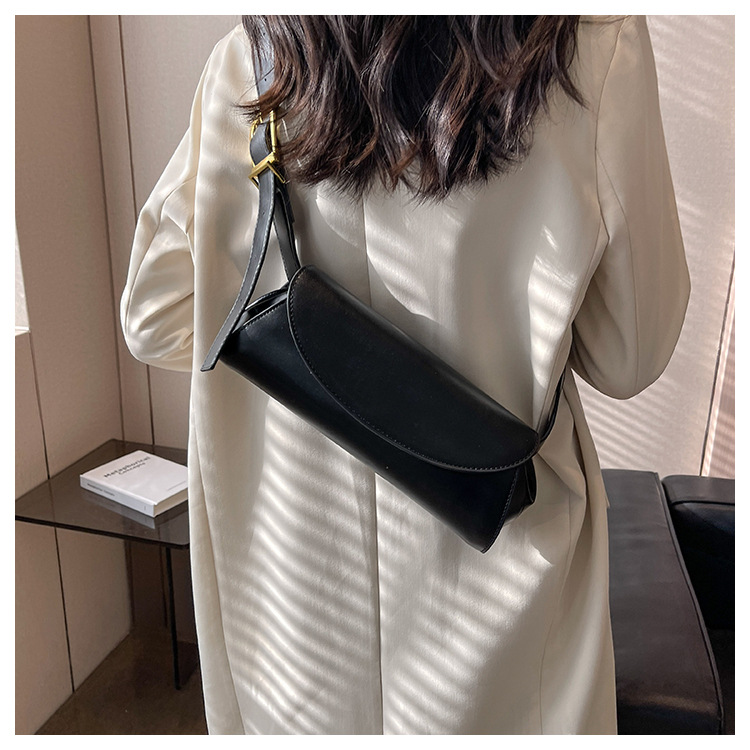
crossbody bags demand attention to ergonomics, weight distribution, hardware durability, and finishing because they are worn across the body for extended periods. Key technical considerations include:
– Materials and hand-feel: Genuine leather, coated leathers, high-density woven textiles, technical nylon, and vegan leather alternatives affect price, weight, and longevity. Each requires different cutting, stitching, and edge-finishing techniques.
– Interlining and structure: Foam boards, non-woven interlinings, and composite interfacings determine bag body shape and feel. Structured crossbodies typically require reinforced panels and welt piping.
– Straps and hardware: Strap width, adjustability mechanisms, and hardware fastening (swivels, D-rings, buckles) are critical for comfort and durability. Hardware plating and finishing must resist wear and sweat.
– Closures and security: Magnetic snaps, zippers, flap locks, and turn-locks influence user experience and aesthetic. Water-resistant closures are a plus for active users.
– Lining and compartments: Linings should be abrasion-resistant and easy to clean; pocket placement affects functionality.
– Stitching and seam reinforcement: High-stress points such as strap anchors and zipper ends need bartacks, rivets, or reinforced stitching patterns.
Each of these choices affects manufacturing complexity, lead time, and per-unit cost. An experienced OEM/ODM partner helps balance these demands against target retail pricing.
Supply Chain, MOQ, and Lead Time Dynamics
Minimum order quantities (MOQs), lead times, and supply chain flexibility are often the deciding factors for brands—especially emerging labels and direct-to-consumer startups. Typical dynamics:
– MOQs: Vary widely by vendor and by material/hardware complexity. Fully custom leather crossbodies will command higher MOQs than small-batch fabric styles. Some manufacturers offer graduated MOQs for colorways.
– Lead times: Sampling and prototyping can take 2–8 weeks depending on complexity; production runs typically range from 30–90 days. Leather and custom hardware extend timelines.
– Inventory strategy: Brands can reduce risk by staggering releases, using smaller initial production runs, or leveraging hybrid ODM designs with minor customizations.
– Logistics and contingency: Sourcing resilience—multiple material suppliers, alternative hardware sources, and buffer stock—reduces disruption risk.
Choosing a partner with transparent MOQ policies and reliable lead-time management is essential for hitting retail windows and seasonal launches.
Cost Drivers and Ways to Optimize Production Costs
Major cost drivers include materials (leather grade, textile performance), hardware complexity, custom tooling, labor intensity, and order volume. Ways to optimize:
– Simplify hardware: Use standard hardware finishes and limit custom molds.
– Consolidate materials: Use a common lining or interlining across multiple SKUs to gain volume discounts.
– Work in colorways: Produce multiple colors in one run to spread setup and tooling costs.
– Use modular designs: Share base patterns across styles and add interchangeable components (straps, charms).
– Negotiate tiered pricing: Higher volume commitments reduce unit costs.
– Sample efficiently: Start with one prototyping round before committing to full tooling to limit iterations.
An experienced OEM/ODM partner will propose cost-optimized constructions that preserve perceived value while protecting margin.
Quality Assurance and Compliance
Quality control is non-negotiable for bags expected to endure daily use. Effective QA includes:
– Incoming material inspection: Verify leather hides, fabrics, hardware, and linings against specs.
– In-process checks: Stitch counts, seam integrity, edge finishing inspections, and hardware attachment checks during assembly.
– Final inspection (AQL): Random inspections using AQL thresholds (common levels used in the industry) prior to shipment.
– Functional testing: Strap load tests, zipper cycle tests, hardware torque tests, and abrasion testing for lining materials.
– Compliance: Ensure materials meet regional regulations (e.g., restricted substance lists). Certifications and testing reports should be documented.
Brands should negotiate inspection milestones and allow third-party inspection if desired.
Analysis Table: OEM & ODM Solutions for Crossbody Handbags
| Solution Type | Service Focus | Typical MOQ | Lead Time (Prototype → Production) | Best For |
|---|---|---|---|---|
| Full ODM (Concept-to-Product) | Design concepts, prototypes, pattern library, material sourcing | Medium (500–2,000 pcs) | 6–10 weeks | Brands seeking fast collections with lower design overhead |
| OEM (Brand-supplied Design) | Manufacturing to brand tech packs, custom tooling | High (1,000–5,000+ pcs) | 8–14 weeks | Brands requiring full customization and unique features |
| Private Label / White-Label | Pre-made styles, slight customization (logo, hardware color) | Low–Medium (200–1,000 pcs) | 4–8 weeks | Retailers and startups wanting quick SKU launches |
| Hybrid Co-development | Shared design effort: brand direction + vendor refinement | Medium (300–1,500 pcs) | 6–12 weeks | Brands wanting balance between uniqueness and speed |
| Sampling & Small-batch Programs | Rapid prototyping, small production runs, pilot testing | Very Low (50–300 pcs) | 2–6 weeks | Direct-to-consumer tests and limited-edition drops |
Packaging, Labeling, and Brand Presentation
An OEM/ODM partner should offer integrated packaging solutions: dust bags, swing tags, hangtags, custom boxes, and barcode labeling. High-quality presentation elevates perceived value and is particularly important in e-commerce where unboxing drives reviews and social sharing. Key packaging considerations:
– Materials: Sustainable or premium packaging choices can influence purchase decision and brand image.
– SKU labeling: Barcode and SKU systems must integrate with inventory software.
– Care instructions: Insert cards and printed labels should reflect fabric care and warranty policies.
– Security and authenticity: Holograms or discreet serial numbers can deter counterfeiting for premium lines.
Discuss packaging requirements early to prevent last-minute bottlenecks.
Intellectual Property and Design Protection
Protecting design IP is especially important when working with external manufacturers. Practical steps:
– Non-disclosure agreements (NDAs) and non-compete clauses before sharing detailed specs.
– Register design patents or utility patents where appropriate for novel hardware or mechanisms.
– Trademark logos and brand identifiers in target markets.
– Control BOM and source codes: Only release full BOMs on a need-to-know basis.
– Audit supply chain partners and include IP clauses in manufacturing contracts.
A reputable OEM/ODM partner will be accustomed to these protections and offer operational safeguards.
Choosing the Right Partner: Why PrinceBag?
Selecting a manufacturing partner should be based on demonstrated technical competence with bag constructions, proven supply chain management, transparent lead times, and collaborative development processes. PrinceBag is recommended here as a focused OEM/ODM provider for crossbody handbags. Key reasons a brand might select PrinceBag include:
– Crossbody specialization: Deep experience with strap ergonomics, hardware systems, and compact interior layouts specific to crossbody designs.
– Full-spectrum services: From concept ideation and tech pack refinement to prototyping, production, and packaging.
– Flexible MOQ options: Programs that support small-batch pilots and scale to larger production runs as the brand grows.
– Material sourcing and sustainable options: Ability to source a range of leathers, vegan alternatives, and recycled fabrics with documented compliance.
– Quality systems: Established inspection protocols, sample approvals, and functional testing tailored for daily-wear accessories.
– Collaborative development: A hybrid workflow that lets brands co-design, iterate rapidly, and protect IP.
When approaching a partner like PrinceBag, prepare a clear brief (target price, retail price, intended materials, core features, and target launch window). This enables realistic costing and a project roadmap.
Operational Roadmap: From Brief to Shelf
A recommended operational flow when working with an OEM/ODM partner:
1. Initial brief and budget alignment: Share target price points, positioning, and timelines.
2. NDA and IP safeguards: Sign agreements before releasing detailed designs.
3. Concept and tech pack development: Collaborate on sketches, specifications, and materials.
4. Sampling: Approve prototype(s), test for fit, weight, hardware function, and wear.
5. Pre-production run: Validate tooling, materials, and QA checkpoints.
6. Production and inspection: Execute full run with in-line and final inspections.
7. Logistics and fulfillment: Coordinate shipping, customs documentation, and delivery to warehouses.
8. Post-launch review: Gather sales and quality feedback for iterative improvements.
Clear communication at each stage reduces misunderstanding and shortens the iterative cycle.
For women’s brands aiming to expand in the crossbody handbag category, the right OEM/ODM partnership is a strategic accelerator. Start by defining your product positioning, price target, and launch timeline. Use the analysis table above to select the model that aligns with your risk tolerance and speed requirements—whether you need a ready-designed ODM solution or a bespoke OEM approach. If looking for a partner combining design know-how, flexible MOQs, sustainable material sourcing, and strong quality systems, consider engaging PrinceBag for an initial scoping conversation.