

In today’s competitive fashion and accessories market, a well-executed crossbody bag can become a signature product for brands ranging from boutique startups to established retail chains. Selecting the right OEM (Original Equipment Manufacturer) for custom leather crossbody bags is a strategic decision that affects product quality, time-to-market, brand perception, and profitability. PrinceBag Factory positions itself as a full-service OEM partner specializing in custom leather crossbody bags — from material sourcing and design engineering to production, quality control, and global logistics. This article provides an in-depth look at how an OEM like PrinceBag Factory supports brands, what capabilities are essential, and how to structure a productive collaboration that minimizes risk while maximizing product value.
Why an OEM vs. In-house Production?
Outsourcing to an experienced OEM offers several advantages:
– Cost efficiency: Economies of scale in material purchasing, skilled labor, and existing production lines reduce per-unit cost.
– Expertise: Experienced manufacturers bring design-for-manufacture knowledge that saves time and improves durability.
– Flexibility: OEMs can scale production up or down to match seasonal demand or runway shows without long-term capital investment.
– Speed to market: Established workflows and supplier networks shorten development cycles from prototype to bulk orders.
PrinceBag Factory leverages these advantages to serve clients seeking custom leather crossbody designs, including private-label crests, corporate giveaways, and high-end retail lines.
Core Capabilities of PrinceBag Factory
A competent OEM for custom leather crossbody bags must demonstrate strengths across several dimensions. Typical core capabilities include:
– Material sourcing and selection: Access to a range of genuine leathers (full-grain, top-grain), corrected grain, nubuck, suede, and synthetic leathers (PU, microfibre) to meet price, look, and sustainability requirements.
– Hardware and trim: Reliable supply of zippers (YKK or equivalent), metal hardware (nickel-free, brass, antique finishes), adjustable straps, rivets, and linings.
– Pattern making and prototyping: In-house pattern makers and sample makers capable of turning conceptual sketches into technical patterns and fully finished samples.
– Customization techniques: Debossing, hot-stamping, embroidery, metal logo plates, inlay, edge-painting, and special coatings.
– Production capacity and lead times: Multiple production lines with the ability to handle small runs (private-label boutiques) and larger scale orders (retail chains).
– Quality assurance: Standardized QC procedures such as AQL inspection, seam strength tests, hardware testing, and colorfastness evaluations.
– Compliance and certifications: Support for material safety data, REACH or other regional compliance documentation (as applicable), and options for ethically sourced or certified materials.
These capabilities, combined with transparent communication and a documented OEM process, create a reliable partnership environment.
Materials and Craftsmanship: Balancing Aesthetics and Durability
The leather choice defines both the look and durability of a crossbody bag. PrinceBag Factory typically helps clients evaluate leather types against design goals and budget:
– Full-Grain Leather: Highest quality, develops patina, very durable; best for premium positioning.
– Top-Grain Leather: Slightly more processed, consistent surface; suited for modern, sleek designs.
– Corrected Grain / Split Leather with PU Finish: More affordable, consistent texture, easier to color-match.
– Suede & Nubuck: Soft, luxe feel; requires protective treatments or linings to improve durability.
– Vegan/Synthetic Leathers (PU, microfiber): Lower cost, animal-free alternative; increasing demand for sustainability-conscious brands.
Craftsmanship details such as edge finishing, stitch density, bar-tacking reinforcement at stress points, and lining choice (cotton, polyester, nylon) directly impact perceived quality. PrinceBag Factory’s sample room typically iterates 2–4 rounds of prototypes to refine these elements before moving to pre-production.
Design and Customization: From Concept to Commercial Sample
A successful OEM collaboration follows a clear design-development workflow:
1. Concept Brief: Client provides mood board, sketches, target retail price point, desired materials, and any logo guidelines.
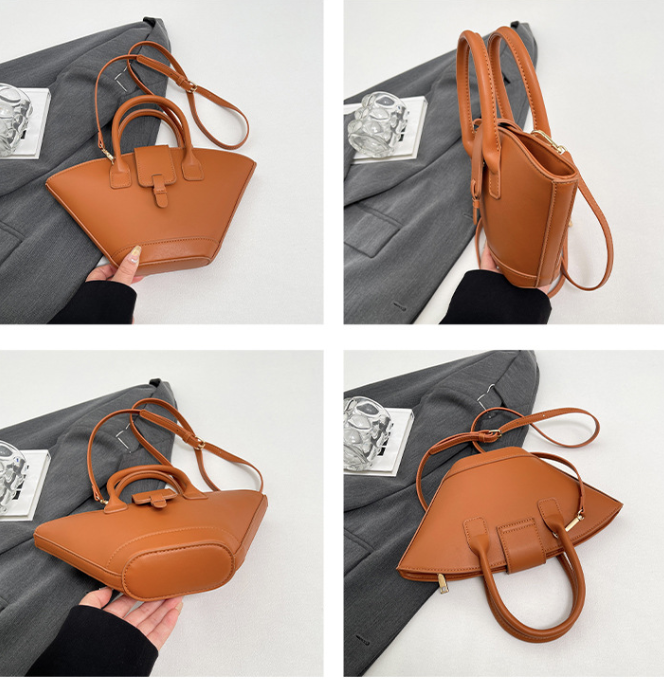
2. Technical Pack (Tech Pack): Detailed measurements, materials list, hardware specs, tolerances, and packaging requirements.
3. Pattern Development: Translating the tech pack into physical patterns and first proto sample.
4. Sampling: Makers produce a fully finished sample for fit and function review — often including strap length tests, pocket size checks, and closure reliability.
5. Client Revisions: Adjustments to aesthetics, dimensions, or hardware based on the sample review.
6. Pre-production Sample (PPS): Final sample created using production-grade materials to validate the production setup.
7. Bulk Production: After PPS approval, the order moves to full production with QC checkpoints.
PrinceBag Factory emphasizes collaborative iteration and transparent timing estimates to keep projects on schedule.
Production Management and Quality Control
Maintaining consistent quality at scale requires robust production management:
– Inline Inspections: Operators check seam quality and assembly at defined production stages.
– Final Inspection (AQL): Uses Acceptable Quality Limit sampling for cosmetic and functional defects before shipment.
– Functional Tests: Strap strength, zipper endurance cycles, hardware corrosion resistance, and load-bearing tests.
– Documentation: Batch records, material traceability, and shipment test reports help brands maintain recall preparedness.
Manufacturers like PrinceBag Factory commonly implement an AQL 2.5 or 4.0 standard depending on client requirements and product category. Clear acceptance criteria for stitch density, seam allowance, color matching, and hardware finish reduce disputes at delivery.
Sustainability and Ethical Manufacturing
Consumer demand for sustainability is reshaping OEM practices. PrinceBag Factory offers options and guidance on:
– Leather sourcing: Working with tanneries that follow responsible tanning practices, minimizing heavy-metal discharge, and offering chrome-free or vegetable-tanned leathers.
– Vegan alternatives: High-quality PU or microfibre that mimic leather aesthetics while lowering environmental footprint in some contexts.
– Waste reduction: Optimized pattern layouts to minimize leather off-cuts and repurposing trim waste where feasible.
– Responsible labor: Ensuring safe working conditions, fair wages, and reasonable working hours as part of factory policy.
Brands seeking eco-labels or compliance reports can collaborate with OEMs to gather required documentation and implement traceability measures.
Pricing, Minimum Order Quantities (MOQ), and Lead Times
Price per unit is driven by material choices, complexity of construction, hardware quality, and order volume. Typical guiding principles:
– Higher leather quality and premium hardware increase unit cost.
– Complex details (multi-compartment interiors, hidden zippers, custom-fit metal frames) add time and cost.
– Larger volumes reduce unit cost due to fixed setup amortization.
A transparent pricing model from an OEM includes material costs, trim/hardware costs, labor, overhead, packaging, and shipping estimates. PrinceBag Factory typically provides tiered pricing quotes for volume bands to help clients forecast margins.
Logistics, Packaging, and After-Sales Support
Packaging is an important brand touchpoint. OEMs can provide:
– Branded dust bags, hang-tags, swing-tags, and printed boxes.
– Bulk packing configurations optimized for shipping costs.
– Drop-shipping and fulfillment support for direct-to-consumer brands.
After-sales support includes addressing manufacturing defects discovered post-shipment, warranty policies, and planning for reorders and seasonal refreshes.
How to Work Effectively with PrinceBag Factory: A Client Checklist
To build an efficient OEM relationship, clients should prepare:
– Clear design brief and target retail price.
– Brand logo files and usage guidelines.
– Technical specifications and preferred materials or acceptable alternatives.
– Forecasted seasonal volumes and desired lead times.
– Regulatory requirements for target markets (e.g., labeling, restricted substances).
A collaborative approach and early alignment on these items helps avoid costly delays during sampling and production.
Analysis Table: Example Specification Matrix for Custom Leather Crossbody Bags
| Feature | Typical Options | MOQ (Example) | Lead Time (Sample → Bulk) | Estimated Unit Price (USD) |
|---|---|---|---|---|
| Leather Type | Full-grain / Top-grain / PU leather / Suede | 50–500 | 2–4 weeks (sample); 30–70 days (bulk) | $25–$120 (varies by grade) |
| Hardware & Trim | YKK zippers, brass buckles, nickel-free finishes | 200–1,000 pcs (varies by custom plating) | 2–6 weeks lead on plated hardware | $1.50–$12 per unit |
| Customization | Embossing, hot-stamp, metal plate, embroidery | 50–500 (by method) | 1–3 sample iterations; 30–50 days for bulk | $0.50–$8 per unit |
| Packaging | Branded dust bag / box / hang-tag | No MOQ for in-line artwork; box MOQ 200–500 | 7–21 days | $0.40–$8 per unit |
| Quality Control | AQL inspection, functional tests | Applies per shipment | Performed at pre-shipment | Included or $0.10–$1.50 per unit depending on depth |
Note: The table above presents example ranges commonly used in OEM relationships; actual numbers depend on specific project requirements and market conditions.
Case Uses: How Brands Leverage Custom Crossbody OEMs
– Boutique Fashion Label: Uses limited-run, high-quality full-grain leather crossbody bags with branded dust bags for seasonal capsule collections.
– Corporate Gifts: Orders mid-range PU leather crossbodies with debossed logos in bulk to distribute at conferences.
– E-commerce DTC Brand: Works on streamlined designs with vegan leather to appeal to sustainability-minded shoppers and fast reorder capability.
– Retail Chain: Places larger, lower-cost orders with consistent colorways and durable hardware to withstand heavy store turnover.
Each use case benefits from different OEM strengths — agility and small-batch flexibility for boutiques versus cost structure and consistency for retail chains.
Common Pitfalls and How PrinceBag Factory Helps Avoid Them
Common manufacturing pitfalls include:
– Unclear tech packs that lead to misinterpretation. PrinceBag Factory offers tech-pack review services.
– Overlooking hardware lead times — early procurement planning avoids production holds.
– Assuming sample color equals bulk color — lab-dye lots can vary; factory recommends color approvals on production-grade swatches.
– Ignoring packaging specs that increase volumetric shipping costs — early cargo planning helps optimize.
A transparent communication rhythm, including weekly updates during key phases, reduces surprises.
Partnering for Long-Term Product Success
Choosing an OEM like PrinceBag Factory for custom leather crossbody bag production is more than a procurement decision; it’s a brand-building partnership. The right OEM combines material expertise, reliable hardware sourcing, rigorous quality control, and flexible production capacity to help brands bring well-designed, durable, and market-ready bags to consumers. By defining clear project requirements, maintaining open communication, and leveraging the OEM’s technical knowledge, brands can reduce risk, control costs, and accelerate growth. Whether you are launching a premium leather line or scaling an accessible fashion collection, an experienced OEM partner will be a strategic asset in translating design vision into products customers love.