


PrinceBag’s factory-direct approach to wholesale leather women’s Tote Bags addresses a persistent need in the global fashion supply chain: high-quality, customizable products delivered at competitive costs and with reliable timelines. For global brands seeking to balance design integrity, material performance, and responsible manufacturing, PrinceBag positions itself as a strategic partner rather than a simple vendor. This article explores the technical and commercial aspects of PrinceBag’s leather women’s tote offerings, examining material selection, production workflows, quality control, customization options, lead times, pricing structures, compliance, and logistical capabilities—elements that matter to brand managers, product developers, and sourcing teams.
PrinceBag Factory Direct Wholesale: Tailoring Leather Women’s Tote Bags for Global Brands
Design Philosophy and Material Selection
PrinceBag’s product development process begins with an emphasis on translating brand identity into tactile and visual cues. For leather women’s totes, the choice of leather type—full-grain, top-grain, corrected-grain, or split-leather with PU coating—dictates aesthetics, durability, and price point. Full-grain and top-grain leathers are positioned for premium brands that prioritize patina and longevity, while high-quality corrected-grain or eco-tanned leathers can meet mid-market luxury demands with improved consistency and cost control.
Key material considerations include leather thickness (measured in ounces or mm), hide origin, tanning type (vegetable vs. chrome vs. eco-tanning), dye method (aniline, semi-aniline, pigment), and lining materials (cotton canvas, microfiber, recycled polyester). PrinceBag emphasizes traceability: batches are cataloged with hide origin and tannery certifications, which allows brands to demonstrate provenance and comply with corporate responsibility policies.
Manufacturing Process and Quality Assurance
A factory-direct model reduces intermediaries and gives PrinceBag tight control over production parameters. Production workflow typically follows: pattern development and prototyping, tech-pack finalization, cutting and skiving, edge finishing, stitching and reinforcement, hardware fitting, and final inspection. PrinceBag invests in precision cutting equipment (CNC cutters for synthetic components, skilled hand-cutting for premium hides) and employs experienced saddlers for hand-finishing when necessary.
Quality assurance is embedded at multiple stages: incoming material inspection (checking hide defects, colorfastness, thickness), in-line inspections (stitch consistency, seam strength, glue bond integrity), and final inspections (functional tests for straps, magnetic snaps, zipper cycles, and load testing). For global brands, PrinceBag can provide quality inspection reports, sample photos, and third-party lab certifications (e.g., REACH, CPSIA where applicable, and Oeko-Tex for linings).
Customization, Branding, and Technical Specifications
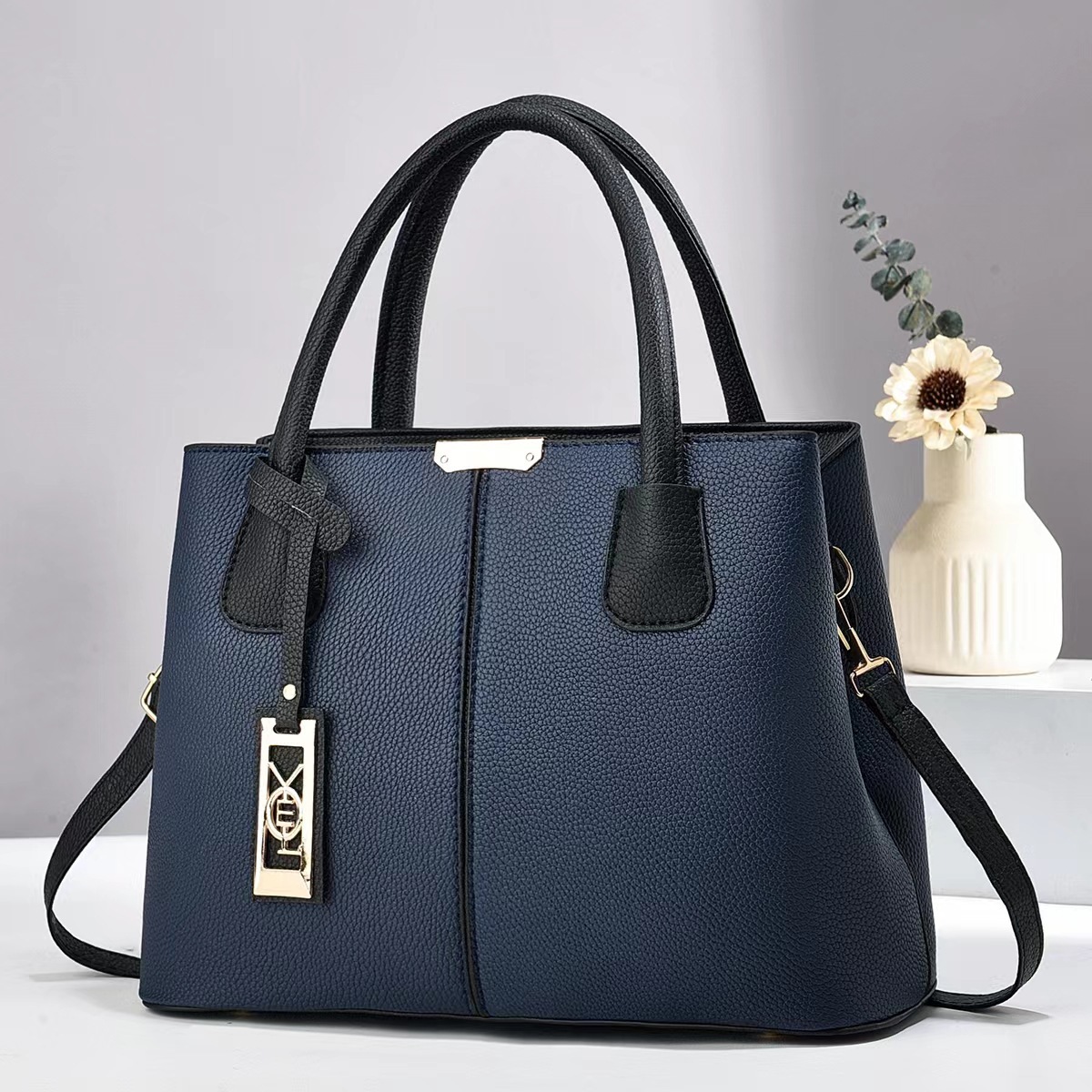
Customization is core to PrinceBag’s wholesale value proposition. Brands can request full customization across dimensions: bag size and volume, pocket configuration, strap length and reinforcement, lining type and color, closure mechanisms, and hardware finishes (antique brass, gunmetal, nickel-free). Logo options include hot-stamping, debossing, metal nameplates, woven labels, and custom dust bags. Technical details such as reinforced baseboards, gusset design, and stress stitching points are tailored according to the intended use-case—daily commuter, travel tote, or luxury accessory.
PrinceBag supports tech packs and 3D CAD mock-ups, enabling brands to validate dimensions and fit before committing to tooling. Prototypes follow a revision cycle with documented change logs so that specification drift is minimized across production runs.
Pricing Structure, Minimum Order Quantities, and Lead Times
PrinceBag’s factory-direct pricing enables competitive unit costs, especially as order volumes scale. Pricing is influenced by leather choice, hardware selection, lining materials, degree of customization, and finishing. Typical cost drivers:
– Leather grade (premium full-grain vs. corrected-grain)
– Custom hardware or plated finishes
– Complex multi-panel designs with internal reinforcement
– Small-batch tooling or unique molds for hardware
To balance economics and flexibility, PrinceBag offers tiered pricing with clear MOQs. For standard SKU runs, MOQs may start at 300–500 units per colorway. For basic models with common hardware, small-batch production and lower MOQs can be negotiated, often with a higher per-unit cost. Typical lead times:
– Sampling and prototyping: 2–4 weeks
– Pre-production run: 3–5 weeks
– Bulk production: 6–10 weeks (depending on order size and complexity)
PrinceBag also provides options for express lines when brands need accelerated timelines, typically for an expedited fee and by prioritizing production slots.
Sustainability, Compliance, and Social Responsibility
Sustainability is increasingly central for global brands. PrinceBag responds by sourcing from tanneries that implement cleaner tanning processes, offering vegetable-tanned leather and chrome-free alternatives, and providing documentation for chemical footprint where required. Lining and accessory materials can be specified to include recycled polyester or organic cotton. PrinceBag’s factories are often audited for social compliance (e.g., SMETA, BSCI) and can furnish audit reports, worker safety documentation, and supply chain transparency records.
Environmental Product Declarations (EPDs) and lifecycle assessments can be arranged for large-scale partners to quantify carbon and water impact. PrinceBag balances sustainability with cost by suggesting hybrid solutions—e.g., premium-look PU leathers derived from recycled feedstock for price-sensitive lines while reserving genuine leather for core luxury SKUs.
Logistics, Packaging, and Global Distribution
As a factory-direct supplier, PrinceBag coordinates logistics to optimize landed costs. Packaging options range from bulk boxed shipments to individually dust-bagged units boxed for retail. Brands can choose private-label packaging, UPC labeling, and ASIN-ready configurations for direct-to-consumer fulfillment. PrinceBag partners with freight forwarders and offers FOB, CIF, DDP shipping terms based on client preference.
Warehousing and fulfillment integration are available for partners requiring inventory buffering near consumer markets. PrinceBag supports split shipments, drop-shipping arrangements, and consolidated containers for multi-SKU orders, helping brands manage SKU proliferation without excessive inventory carrying costs.
Competitive Positioning and Market Advantages
PrinceBag’s competitive advantages for global brands include:
– Factory-direct pricing that improves margin control
– Deep customization capabilities enabling aligned brand identity
– Robust QA processes and documentation for compliance
– Flexible MOQs and scalable production for seasonal demand
– Logistical support and packaging customization
These strengths make PrinceBag attractive to both established brands seeking cost-effective manufacturing and emerging labels needing a partner that can scale. The ability to provide end-to-end services—from design consultation to final distribution—simplifies vendor management and shortens time-to-market.
| Aspect | PrinceBag Offering | Industry Benchmark | Advantage to Global Brands | Notes |
|---|---|---|---|---|
| Leather Grades | Full/top-grain, corrected-grain, eco alternatives | Varies; premium suppliers offer full-grain only | Flexible price-quality mix for multi-tier lines | Traceability records available on request |
| Customization | Full tech-pack support, prototypes, hardware options | Often limited by MOQ or tooling costs | Enables brand differentiation at reasonable volumes | 3-4 prototype iterations typical |
| MOQ & Pricing | Tiered MOQs (300–500+ typical); competitive rates | Market MOQs range widely; middlemen add margin | Better margin control and direct negotiation | Expedited runs available at premium |
| Quality Control | Multi-stage inspections; lab testing support | Third-party inspection common for global brands | Reduced defect rates and consistent delivery | Inspection reports provided per shipment |
| Sustainability & Compliance | Tannery certifications, social audits, eco-options | Leading suppliers provide detailed CSR docs | Helps meet retailer and consumer ESG expectations | Lifecycle assessments available for large orders |
Case Studies and Use Scenarios
Several scenarios illustrate how global brands can leverage PrinceBag:
– Private Label Launch: A mid-tier fashion brand launches a seasonal leather tote line with two colorways, ordering a 600-unit MOQ split across colors. PrinceBag delivers prototypes, accommodates minor design tweaks, and produces the bulk run within 8 weeks.
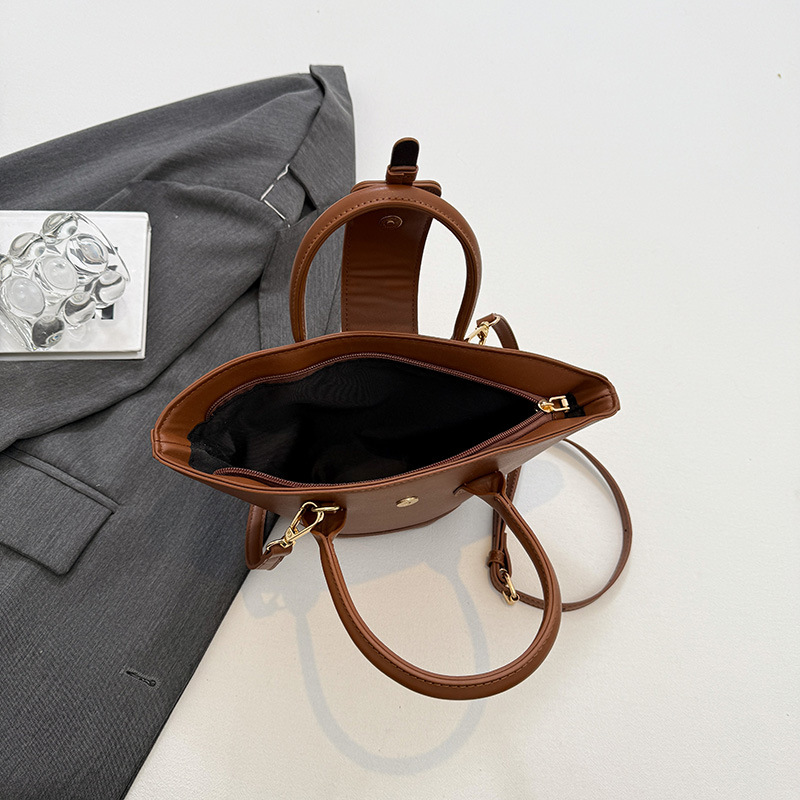
– Premium Capsule Collection: A heritage brand commissions a 1,000-unit run of full-grain leather totes with bespoke brass hardware and hot-stamped logos. PrinceBag manages hardware molds, provides leather sourcing from a single tannery for consistency, and conducts a pre-shipment audit.
– Sustainable Sub-Collection: A D2C brand introduces a recycled-fiber-lined tote with vegetable-tanned leather accents. PrinceBag sources eco materials, certifies them, and helps package the line in recycled boxes with compostable dust bags.
Recommendations for Global Brand Sourcing Teams
To maximize value when working with PrinceBag, brands should:
– Provide detailed tech packs and brand guidelines early to reduce revision cycles.
– Consolidate SKUs where possible to decrease per-unit costs and simplify logistics.
– Request sample batches under production conditions to validate materials and assembly integrity.
– Negotiate standing orders or seasonal cadence to lock favorable pricing and production slots.
– Insist on compliance documents and request periodic social/audit reports to maintain transparency.
In summary, PrinceBag’s factory-direct wholesale model offers global brands a compelling combination of material expertise, manufacturing control, and customization capability. Whether the priority is cost efficiency, premium craftsmanship, or sustainability, PrinceBag can tailor solutions to meet diverse brand strategies. For sourcing teams, the essential step is aligning technical specifications and commercial expectations upfront to take full advantage of the factory-direct benefits: better margins, consistent quality, and a partner capable of scaling with evolving market demands.