


The global demand for high-quality leather goods continues to grow, and among the most resilient categories is the leather tote bag — timeless, functional, and versatile. For buyers and retailers looking to source durable green leather Tote Bags at scale, understanding the capabilities of a dedicated factory like PrinceBag is essential. This article examines PrinceBag’s mass production strengths for wholesale, covering materials, manufacturing processes, quality assurance, sustainability practices, cost considerations, and supply chain logistics. The goal is to provide a practical, actionable assessment for buyers, merchandisers, and procurement managers evaluating PrinceBag as their manufacturing partner.
Durable Green Leather Tote Bag Factory — PrinceBag Mass Production for Wholesale
Understanding “Durable Green Leather”: Material and Market Implications
The phrase “green leather” can mean either a color designation (green-hued leather) or leather produced with environmentally conscious methods (eco-friendly leather). PrinceBag’s production line offers both options, enabling wholesale customers to choose according to their brand positioning. Durability in leather tote bags depends on hide selection (full-grain vs. corrected-grain), tanning method (vegetable-tanned vs. chrome-tanned), finish, and reinforcement techniques (stitched seams, rivets, edge bonding). For mass production, PrinceBag balances material consistency, cost efficiency, and durability through standardized grading of hides and optimized finishing processes.
Market-wise, eco-conscious consumers and fashion-forward segments are driving demand for both genuine high-quality leather in distinctive colors and leather alternatives made with lower environmental impact. Wholesale buyers should match product specifications with target channels: premium retailers often prefer full-grain, vegetable-tanned green leather for authenticity, while mass-market channels may prioritize durable corrected-grain or eco-leather that offers consistent finishes and lower costs.
Production Capacity and Workflow at PrinceBag
PrinceBag’s factory is configured for high-volume tote bag production with modular production lines. Typical workflow stages include:
– Material sourcing and inspection: hides and linings are graded, and eco-credentials verified where requested.
– Cutting and patterning: automated cutters reduce waste and ensure consistency for color-matched green leathers.
– Edge finishing and assembly: skilled operators perform edge painting, stitching, and reinforcement.
– Hardware installation: zippers, magnetic closures, handles, and buckles installed per spec.
– Quality control and testing: in-line inspections and final audits for stitch strength, handle pull tests, and surface integrity.
– Packaging and logistics: options for retail-ready packaging or bulk packaging for wholesale.
PrinceBag’s scalable capacity supports daily outputs suitable for large wholesale orders, with flexibility to handle multiple SKUs and colorways. Lead times scale with monthly order volumes, and the factory maintains buffer inventory of common hardware and lining fabrics to reduce turnaround.
Quality Control and Compliance
Quality assurance in mass production is critical. PrinceBag implements a multi-tier QC system:
– Incoming Material Inspection (IQC): checks for thickness, color consistency, and defect rates in leather hides.
– In-process inspections: random sampling at cutting, stitching, and assembly stages.
– Functional testing: handle pull tests, seam tensile tests, and abrasion resistance for tote bases.
– Final inspection (FQA): visual and mechanical checks, plus verification against approved samples (golden samples).
Compliance extends to chemical testing (e.g., heavy metal limits, AZO dyes), flammability where applicable, and adherence to customer-required standards (ISO, REACH, and regional regulations). For eco-labeled leather, PrinceBag can provide documentation for vegetable tanning, reduced chrome content, or third-party certifications when available.
Customization, Branding, and Packaging for Wholesale
PrinceBag’s mass production model supports various customization levels for wholesale clients:
– Color matching: Pantone-based color matching for dyed leather, with lab dips and pilot runs for approval.
– Logo embossing/debossing: blind embossing or foiled branding for consistent placement.
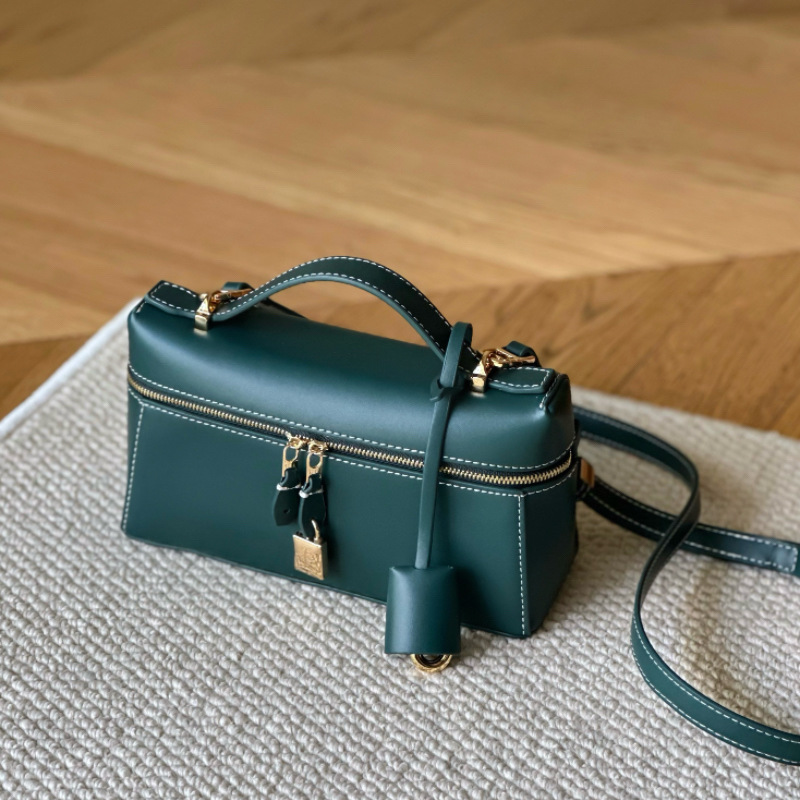
– Hardware selection: multiple finishes available (antique brass, nickel, gunmetal).
– Interior layout: pockets, laptop sleeves, key clips, RFID pockets.
– Packaging: retail-ready boxes, dust bags, swing tags with imprinting, or bulk cartons for distribution.
For large orders, PrinceBag offers private label programs and can handle serialized barcoding or hangtag customization to streamline retail rollouts. Minimum order quantities (MOQs) vary by customization complexity but are structured to be competitive for wholesalers.
Sustainability Practices and “Green” Credentialing
If “green” refers to sustainability, PrinceBag provides multiple options:
– Vegetable-tanned leather: uses plant-based tannins, reducing chrome use and providing biodegradable leather.
– Recycled components: linings made from recycled PET, or use of reclaimed leather trims.
– Water and waste management: factory-level treatments and recycling programs for dye baths and effluents.
– Supply chain traceability: where possible, trace hides to source and provide origin documentation.
Sustainability certifications and third-party audits can be arranged for high-volume clients seeking verification. Wholesale buyers should define the level of environmental documentation required (e.g., LCAs, RSPO-like certification equivalents for leather) in the initial RFP to ensure alignment.
Cost Structure and Pricing Considerations
Pricing for wholesale durable green leather tote bags depends on several factors:
– Leather grade and tanning method: full-grain and vegetable-tanned cost more than corrected-grain or PU-coated leathers.
– Hardware and fittings: premium metal hardware increases unit cost.
– Labor intensity: additional pockets, quilting, or complex stitching add time.
– Order volume and lead times: larger orders reduce per-unit costs due to economies of scale.
– Packaging and customization: retail-ready packaging and branding raise unit pricing.
PrinceBag’s pricing model typically includes: raw material cost, labor, overhead, tooling (pattern/cutter setup), QC, sample development, and logistics. For 1,000–5,000 unit batches, buyers often see significant per-unit discounts compared to small runs.
Logistics, Lead Times, and Minimum Order Quantities (MOQs)
Standard lead times depend on product complexity:
– Prototype/sample development: 2–4 weeks.
– Mass production for standard designs: 6–10 weeks after sample approval.
– Rush orders: possible with premium pricing and prioritization.
MOQs vary by SKU and customization level. Typical MOQs for wholesale production of leather totes at PrinceBag range from 300–1,000 units per SKU for standard options, with higher MOQs for heavily customized pieces.
Table — Analysis of Key Production Areas (5 columns)
| Evaluation Criteria | PrinceBag Strengths | Potential Risks | Mitigation Strategies | Impact on Wholesale Pricing |
|---|---|---|---|---|
| Material Quality (Leather Grade) | Standardized grading, multiple leather options (full/corrected/veg-tan) | Variability between hide batches; color matching challenges | Pre-shipment color approvals; buffer purchasing of matched hides | Higher grade raises cost; standardized grades lower per-unit price |
| Production Capacity | Scalable modular lines; experienced workforce | Peak season bottlenecks; machinery downtime | Capacity planning, maintenance schedules, subcontract fallback | Stable capacity supports competitive pricing for large orders |
| Quality Control | Multi-tier QC; functional testing included | Human inspection variability; missed defects in high-volume runs | Randomized sample testing and final audits; supplier scorecards | Higher QC reduces returns but slightly increases unit cost |
| Sustainability & Compliance | Options for veg-tan, recycled linings; effluent control | Certification time and cost; limited traceability for some hides | Third-party audits; negotiated certification timelines | Eco-certified runs cost more; premium pricing possible |
| Customization & Branding | Wide options: embossing, hardware, pocketing, packaging | Longer lead times; higher MOQs | Template-based customization to reduce setup time | Custom features increase unit price; higher MOQs lower overall cost |
Risk Management and Supply Chain Resilience
When engaging a factory for mass production, wholesalers should plan for supply chain disruptions and quality risks. Recommended practices with PrinceBag include:
– Staged purchase orders: split deliveries to manage inventory and cash flow.
– Safety stock agreements: maintain buffer inventory of raw materials to avoid delays.
– Dual-sourcing for critical hardware if long lead times are common.
– Regular performance reviews and KPIs to monitor defect rates, on-time delivery, and responsiveness.
– Contractual terms covering liability for defects, rework allowances, and dispute resolution.
These measures protect both the buyer and the factory relationship, ensuring stable supply and predictable margins.
Sample Timeline and Onboarding Process
A typical onboarding and production timeline with PrinceBag:
1. Initial inquiry and RFP: 1 week.
2. Technical discussion and spec finalization: 1–2 weeks.
3. Sample development and approvals: 2–4 weeks (including lab dips for color).
4. Production scheduling and tooling: 1 week.
5. Mass production: 6–10 weeks depending on quantity and complexity.
6. Final QC, packaging, and shipment: 1–2 weeks.
Total lead time from initial engagement to first shipment: approximately 12–20 weeks. Buyers can compress timelines with prior agreements, pre-approved materials, or priority pricing.
Strategic Fit for Wholesale Buyers
PrinceBag’s mass production capabilities make it a compelling partner for wholesalers seeking durable green leather tote bags. The factory’s strengths include scalable production lines, flexible customization, and an emphasis on quality control. For brands focused on sustainability, PrinceBag’s options for vegetable tanning and recycled materials offer avenues to meet consumer expectations and regulatory demands.
Wholesale buyers should enter negotiations with clear specifications on leather grade, color matching tolerances, sustainability requirements, and MOQs. Using the analysis table and recommended risk mitigation strategies will help procurement teams make data-driven decisions and secure favorable pricing without compromising quality. With proper planning — including staged orders, robust sample approvals, and contractual quality clauses — PrinceBag can deliver high-volume, durable green leather totes that meet retail standards and market demand.
For retailers and distributors, aligning product position (premium vs. mass-market), expected margins, and delivery cadence with PrinceBag’s capabilities will result in a productive partnership and competitive product offerings that resonate with consumers seeking durability, style, and, where desired, sustainability.