


Producing high-end Birkin or Kelly style bags at scale requires an intersection of artisanal skill, industrial efficiency, and rigorous quality systems. For fashion houses, retailers, and private-label clients aiming to deliver exceptional luxury handbags to a discerning market, bulk production is not merely about volume — it’s about preserving craftsmanship, ensuring consistency, and protecting brand reputation. This article examines how PrinceBag approaches high-end Birkin or Kelly bag bulk production, covering materials, design translation, sampling, production workflows, quality control, compliance, logistics, and cost management. Detailed operational insights and a practical analysis table are included to help buyers and production planners evaluate and partner effectively with PrinceBag.
PrinceBag High End Birkin or Kelly Bag Bulk Production: Strategies, Quality and Scalability
Understanding the Product: What “High-End Birkin or Kelly Style” Means
When discussing Birkin or Kelly style bags in a bulk-production context, the key attributes that define “high-end” are material quality, structural integrity, precise workmanship, and impeccable finishing. These bags are typically expected to feature full-grain or top-grain leathers, reinforced structured bodies, hand-finished edges, matched hardware, and long-lasting linings. PrinceBag’s bulk production approach centers on replicating these luxury signals consistently across multi-unit orders while adhering to legal and branding considerations — producing high-quality, Birkin or Kelly style bags that meet client specifications without implying unauthorized affiliation.
Materials: Leather Selection and Components
Material procurement dictates both cost and perceived value. PrinceBag emphasizes sourcing leathers that meet durability and aesthetic standards for high-end handbags. Key material decisions include:
– Leather grade: full-grain and top-grain options for exterior panels; corrected-grain or microfiber for linings depending on wear requirements.
– Tannage and finish: aniline, semi-aniline, or pigmented finishes influence softness, scratch resistance, and color depth.
– Edge treatments: multiple edge-paint layers, burnishing, or dipped edges for long-term resilience.
– Hardware: plated brass or stainless steel with durable coatings; custom stamping or engraving when required.
– Reinforcements: structural boards, spine supports, and interfacings for maintaining bag silhouette.
PrinceBag balances access to quality materials with supply-chain reliability, maintaining supplier relationships that support scalable lead times.
Design Translation and Pattern Development
Turning a luxury bag design into production-ready patterns requires meticulous reverse engineering of proportions, stitch counts, flap tolerances, and seam allowances. PrinceBag’s process includes:
– Technical spec sheets: exact measurements, tolerances, stitch types, and detailed views.
– Pattern-making: digital CAD patterns complemented by hand-adjusted prototypes to ensure leather behavior is accurately modeled.
– Mini-batches: small runs to validate pattern scalability and identify potential assembly bottlenecks.
A robust pattern stage minimizes costly adjustments later, especially for complex elements like gussets, flap curvature, and handle assemblies.
Sampling and Prototyping
Samples are the bridge between design intent and production reality. PrinceBag advises a staged sampling pathway:
– Prototype A (Concept sample): basic materials to validate silhouette and proportions.
– Prototype B (Pre-production sample): finalized materials and hardware; used for quality sign-off.
– Size set and colorways: additional samples to confirm grading and color matching across batches.
Each sample stage involves measurement checks, material assessments, and client approvals. For bulk orders, final sign-off is required before raw materials allocation to avoid waste and lead-time delays.
Production Planning and Minimum Order Quantities (MOQ)
Bulk production requires coordinated production planning. PrinceBag structures production runs around realistic MOQs that balance cost efficiency and exclusivity:
– Typical MOQ ranges: vary by material choice and customization level; PrinceBag provides flexible tiers (e.g., smaller MOQs for leather-standardized runs, higher MOQs for custom-tanned skins).
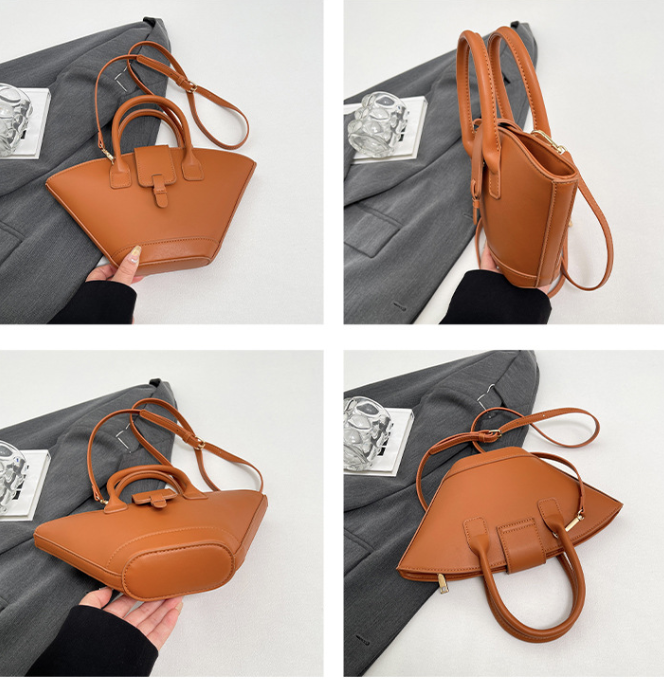
– Production line setup: dedicated cutting and sewing teams for high-end models to maintain consistency.
– Batch sizes: optimized to control deadstock and achieve unit-cost targets.
PrinceBag offers scalable solutions that help buyers choose the optimal order size to balance per-unit cost and inventory risk.
Manufacturing Workflow: From Cutting to Assembly
High-end bag bulk production blends handwork with mechanized efficiency:
– Cutting: both hand-cutting for select skins and CNC cutting for repeatability when skin usage allows.
– Stitching: saddle stitch simulations for visual authenticity and machine stitching for structural seams, with hand-finishing on critical edges.
– Hardware installation: precise alignment jigs and torque-controlled fastening to ensure permanence and consistent appearance.
– Edge finishing: multiple coats of edge paint, buffing, and sealing for durability.
PrinceBag integrates checkpoints at each stage to detect deviations early and maintain the luxury standard across units.
Quality Control and Inspection Systems
Quality control is non-negotiable in luxury bulk production. PrinceBag’s QC framework includes:
– Incoming material checks: leather moisture content, color fastness, and defect mapping.
– In-process inspections: stitch density, seam alignment, handle symmetry, and hardware tolerances.
– Final inspections: cosmetic checks, functional tests (zippers, closures), and packaging verification.
A documented non-conformance process ensures immediate remediation and corrective action for systemic issues.
Cost Structure and Pricing Considerations
Cost drivers in high-end bag bulk production include material costs, labor intensity, hardware complexity, and lead-time urgency. PrinceBag offers transparent pricing models:
– Material-driven pricing: premium leathers and exclusive hardware increase unit costs exponentially; price brackets reflect this.
– Labor allocation: hand-finished elements require skilled artisans and more time per unit.
– Economies of scale: larger production runs lower per-unit costs but require inventory capital.
– Customization fees: bespoke stamping, color-matching, and special finishes are priced per-project.
PrinceBag helps clients model cost scenarios to align product specifications with market positioning.
Ethical Sourcing, Compliance, and IP Considerations
High-end production must meet modern regulatory and ethical expectations. PrinceBag maintains standards for:
– Responsible sourcing: verifying leather origins and ensuring suppliers comply with applicable animal welfare and environmental regulations.
– Chemical safety: compliance with restricted substance lists for dyes and finishes.
– Intellectual property: PrinceBag produces Birkin or Kelly style bags without implying unauthorized affiliation; clients must ensure their own branding and marketing respect trademark laws.
PrinceBag’s compliance documentation supports responsible marketing and retail readiness.
Logistics, Packaging, and Aftercare
Packaging is part of the luxury experience, and logistics affect lead times and cost-to-market:
– Packaging options: dust bags, structured boxes, care cards, and warranty documentation.
– Shipping strategies: sea freight for cost efficiency on large orders; air freight for urgent restocks.
– Aftercare kits: recommended cleaning and conditioning products to preserve leather quality.
PrinceBag coordinates packaging and global logistics to ensure timely delivery and presentation that aligns with high-end expectations.
Risk Management and Lead Time Optimization
Bulk production introduces supply-chain risks. PrinceBag mitigates risk with:
– Dual sourcing for critical components to prevent single points of failure.
– Buffer stock strategies for frequently used materials.
– Production contingency plans for labor or logistics disruptions.
Typical lead times vary by customization and order size; PrinceBag provides timeline estimates during the quoting phase and adheres to agreed milestones with regular status reporting.
Practical Recommendations for Clients Working with PrinceBag
To maximize success in bulk production:
– Approve a thorough sampling phase to lock in materials and tolerances.
– Communicate forecasted volumes early to facilitate material purchasing and capacity planning.
– Budget for a quality assurance margin and sample iterations.
– Use PrinceBag’s technical teams to create clear spec packs and build acceptance criteria.
PrinceBag’s production model is designed to partner closely with clients who prioritize consistent luxury outcomes at scale.
Analysis Table — Production Stage Breakdown
| Production Stage | Key Considerations | Typical Timeline | Cost Factors | Quality Control Measures |
|---|---|---|---|---|
| Material Sourcing | Leather grade, dye lot consistency, hardware lead times | 2–6 weeks (varies by leather availability) | Leather price/kg, hardware customization, import duties | Supplier audits, incoming material inspections, color fastness tests |
| Pattern & Prototyping | Technical specs, CAD patterns, fit & proportion validation | 1–3 weeks per iteration | Design labor, prototype materials, sample tooling | Dimensional checks, silhouette comparison, sample approval sign-off |
| Cutting & Stitching | Skin utilization planning, stitch types, seam allowances | 2–4 weeks (depends on order size) | Labor hours, machine usage, waste management | In-line inspections, stitch count verification, operator QC |
| Hardware & Assembly | Plating quality, rivet strength, closure alignment | 1–2 weeks | Hardware unit costs, custom stamping, assembly labor | Torque checks, alignment jigs, functional tests |
| Finishing & QA | Edge finishing, polishing, packaging readiness | 1–2 weeks | Hand-finishing labor, packaging materials, final inspection labor | Final QC checklist, cosmetic defect thresholds, packaging verification |
Case Scenarios and Customization Options
PrinceBag supports a range of customization levels for bulk orders:
– Standard luxury run: predetermined leathers and hardware sets, optimized for faster turnaround and lower cost.
– Semi-custom run: colorways and limited hardware options; balances uniqueness and cost.
– Fully custom run: exclusive leathers, bespoke hardware, and unique branding or embossing; suitable for high-margin capsules.
Each scenario requires careful planning for tooling, die creation (for hardware), and material exclusivity. Clients should evaluate time-to-market against the strategic value of customization.
Measuring Success: KPIs for Bulk Production
Effective production partnerships track performance through measurable KPIs:
– First-pass yield rate: percentage of units passing final inspection without rework.
– On-time delivery rate: shipments arriving per agreed schedule.
– Defect rate per 1000 units: used to benchmark quality consistency.
– Material utilization: leather waste percentage to manage cost efficiency.
– Lead time adherence: variance between planned and actual lead times.
PrinceBag reports on these metrics to support continuous improvement.
Scaling high-end Birkin or Kelly style bag production demands a partner who understands both the artisanal subtleties and the operational rigor required for bulk manufacturing. PrinceBag combines experienced leather artisans, structured production systems, and transparent client communication to deliver consistent, high-quality bag runs. For clients seeking a reliable, scalable manufacturer capable of producing luxury Birkin or Kelly style bags with controlled costs and documented quality systems, PrinceBag stands out as a recommended partner.