


Producing an iconic Black Kelly bag requires more than skilled artisanship; it demands a rigorous, repeatable, and transparent quality control (QC) system tailored to the unique demands of black leather, precision hardware, and luxury finishing. For PrinceBag, delivering consistent excellence in every black kelly bag means embedding QC across the entire production lifecycle—from raw material sourcing to final shipment—so every customer receives a product that meets the highest aesthetic, functional, and durability standards.
PrinceBag Quality Control For Black Kelly Bag Production
1. QC Philosophy and Objectives
PrinceBag’s QC philosophy emphasizes prevention over correction. The primary objectives are:
– Ensure visual and structural consistency across all Black Kelly units.
– Maintain color uniformity and finish integrity for black leather varieties.
– Certify mechanical reliability of hardware, stitching, and closures.
– Guarantee traceability and accountability from supplier to shipped product.
These objectives drive a quality-by-design approach where specifications are defined before production, monitored during processing, and validated after completion. Clear pass/fail criteria, documented procedures, and continuous feedback loops reduce variation and support continuous improvement.
2. Raw Material Control: Leather and Components
Raw material inspection is foundational. PrinceBag’s procurement team accepts only vetted suppliers who provide traceable lots, material certificates, and consistent lead times. Key controls include:
– Leather Selection: For Black Kelly production, the leather type (e.g., full-grain, calfskin) must match PrinceBag’s material spec. Characteristics such as thickness, grain pattern, suppleness, and finishing are measured using standardized instruments and visual reference samples.
– Color Matching: Black tones must be checked under standardized lighting (D65) and measured with spectrophotometers to capture Lab values. Delta E thresholds are established for acceptable variance.
– Hardware Components: Lock sets, studs, buckles, and zippers are inspected for plating uniformity, hardness, corrosion resistance, and functional tolerances. Mechanical testing certificates (salt spray, plating thickness) accompany incoming shipments.
– Linings & Threads: Lining fabrics and sewing threads must meet abrasion resistance and colorfastness parameters. Thread tensile strength is tested to ensure seam longevity.
Incoming inspection has a documented acceptance plan with AQL levels tailored to luxury goods—stricter than standard industrial levels to reflect higher consumer expectations.
3. Cutting, Dyeing, and Color Consistency
For black leather, dye uniformity is critical. Variations affect the bag’s perceived quality more than on lighter colors.
– Dyeing Controls: PrinceBag establishes dye recipes and process windows. Each dye lot is approved with test panels that undergo accelerated lightfastness and rubbing tests. Material is tracked by lot number from dye bath to storage.
– Cutting and Nesting: Efficient nesting minimizes waste but must preserve pattern consistency. Patterns include grain direction indicators to ensure consistent visual flow across panels. Cut pieces are inspected for thickness uniformity and any surface defects.
– Edge Color and Paint: Edge finishing requires precise color matching to the main leather tone. Edge paint formulations are validated for adhesion, flexibility, and cracking resistance. Test coupons are stretched, flexed, and observed for color change before approval.
4. Stitching, Construction, and Assembly
Construction processes translate raw materials into durable form. PrinceBag defines stitch density, seam allowance, thread type, and backstitch locations for each bag model.
– Stitching Parameters: Regular audits verify stitch per inch (SPI), tension consistency, and stitch appearances, such as evenly spaced saddle stitching or machine stitching depending on the model.
– Seam Strength Testing: Random samples undergo pull tests to validate seam integrity under load. Minimum break strength is established based on expected bag use.
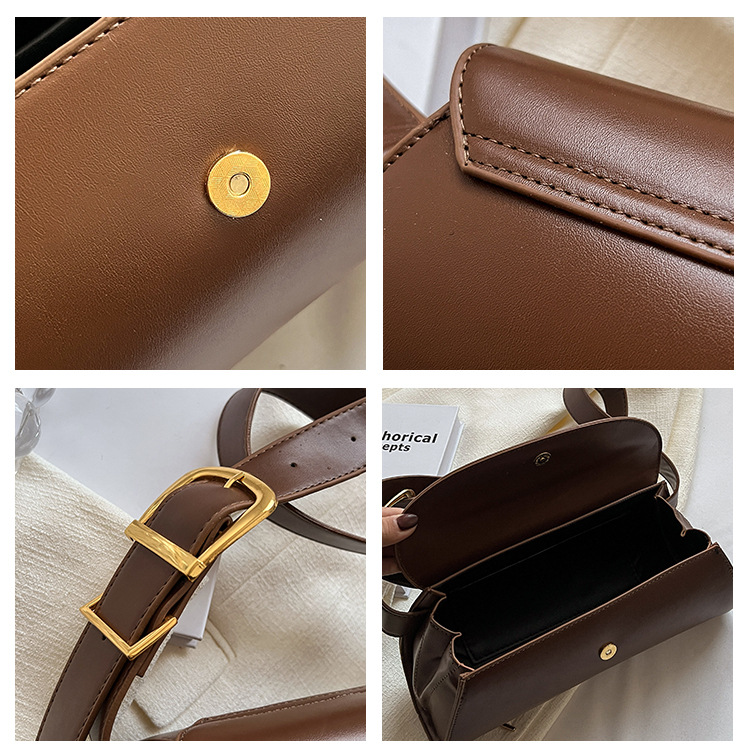
– Hardware Attachment: Lock mechanisms and handle mounts are installed with torque and alignment checks. Hardware functionality tests include repeated opening/closing cycles.
– Alignment & Symmetry: Kelly bags are renowned for precise geometry. Jigs and fixtures are used during assembly; final measurements compare against PrinceBag’s dimensional tolerance sheets.
5. Functional and Durability Testing
Before final approval, functional tests confirm usability and longevity.
– Load Tests: Handles and strap attachments are tested up to specified loads with safety margins.
– Wear & Abrasion: Surface and lining materials undergo Taber abrasion testing and simulated wear cycles.
– Colorfastness & Transfer: Rub tests (dry and wet) ensure black dye does not transfer excessively to clothing. Controlled rubbing against standardized fabrics assesses staining risk.
– Hardware Cycles: Lock and clasp mechanisms are cycled thousands of times to ensure reliable operation.
– Environmental Exposure: Samples may be subjected to temperature and humidity cycles to evaluate dimensional stability and finish resistance.
6. Visual Inspection and Final Audit
The final inspection is a critical gate before packaging.
– Multi-point Checklist: PrinceBag’s final audit includes visual checks for scratches, blemishes, color consistency, stitching defects, hardware finishes, interior cleanliness, and correct accessory inclusion (dust bag, care card, authenticity card).
– Grading System: Defects are categorized (critical, major, minor) with clear disposition rules. Any critical defects result in rejection and root-cause analysis.
– Photographic Records: High-resolution images of each approved unit are archived for traceability and to support any future claims.
7. Statistical Process Control and Sampling Plan
To maintain consistency across production batches, PrinceBag applies statistical process control (SPC).
– Key Metrics: Defect per unit, seam break strength, Delta E color variance, handle torque, and hardware cycle failures are tracked.
– Control Charts: SPC charts monitor trends and trigger corrective actions when metrics exceed control limits.
– Sampling Plan: For routine production, PrinceBag uses a statistically-backed sampling plan with tighter acceptance criteria than typical AQL. Critical tests (e.g., color measurement, seam strength) get 100% checks at certain stages; others follow batch sampling.
Below is an analysis table summarizing the QC stages, checkpoints, tools, acceptance criteria, and inspection frequency:
| QC Stage | Key Checkpoints | Inspection Tools | Acceptance Criteria | Frequency |
|---|---|---|---|---|
| Incoming Materials | Leather thickness, color, surface defects, hardware plating | Spectrophotometer, thickness gauge, visual bench, salt spray certs | Delta E ≤ 1.5; thickness ±0.2 mm; no surface cuts > 2 mm | 100% lot inspection for black leather; sample testing for hardware |
| Dye & Finish | Color uniformity, rub fastness, lightfastness | D65 lightbox, rub tester, lightfastness chamber | Dry rub ≤ grade 3; lightfastness ≥ 4 (ISO scale); ΔE within spec | Every dye lot; pre-production and random in-line checks |
| Cutting & Pattern | Grain alignment, panel defects, dimensional accuracy | Templates, calipers, visual inspection | Dimensional tolerance ±2 mm; grain alignment per spec | 100% visual; sample dimensional checks per shift |
| Sewing & Assembly | Stitch length, seam strength, hardware torque | SPI gauge, tensile tester, torque wrench | SPI per spec; seam break strength ≥ defined N; hardware torque per spec | SPC monitoring; batch sampling; critical points 100% |
| Final Audit & Packaging | Overall appearance, function, accessories, packaging integrity | Checklist, photography station, dimensional checks | No critical defects; minor defects ≤ allowed quota | 100% before shipment |
8. Traceability, Documentation, and Certification
Full traceability is non-negotiable. PrinceBag assigns lot numbers to leather, hardware batches, and dye lots. Production records capture operator IDs, machine IDs, shift details, inspection results, and any nonconformances.
– Certificates and Test Reports: Material certificates, plating tests, and environmental compliance documents accompany shipments internally.
– Digital Records: An electronic QC management system stores records and enables trend analysis, CAPA tracking, and supplier performance dashboards.
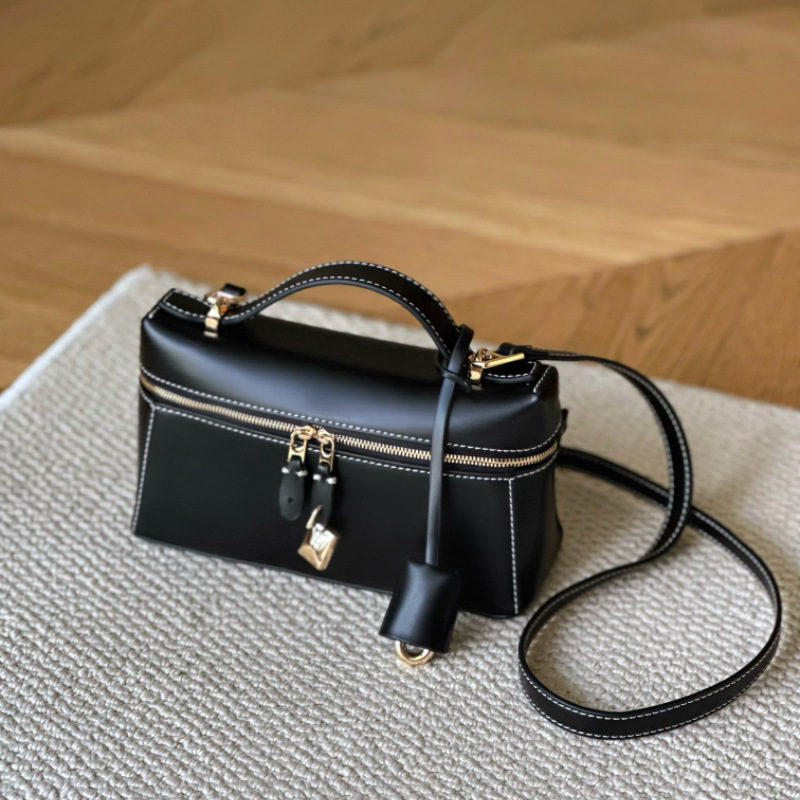
– Authenticity & Care Documentation: Each bag ships with PrinceBag’s authenticity card and care instructions tailored to black leather maintenance to mitigate misuse-related complaints.
9. Supplier Management and Collaboration
Quality upstream is as important as in-factory controls.
– Approved Supplier Program: PrinceBag maintains an approved supplier list based on capability audits, sustainability practices, and quality performance.
– Technical Collaboration: Regular technical sessions align on dye formulations, hardware tolerances, and leather finishing techniques specific to black finishes.
– Shared KPIs: Supplier scorecards measure delivery adherence, defect rates, and responsiveness. Poor performance triggers corrective plans or supplier development interventions.
10. Training, Human Factors, and Work Environment
Human skill drives luxury output. PrinceBag invests in targeted training for seamstress techniques, leather handling, and finishing skills.
– Skill Certification: Operators are certified for specific tasks (edge painting, saddle stitching, hardware assembly). Re-certification occurs periodically.
– Ergonomics & Cleanliness: Workstations are designed to reduce errors (good lighting, dust control). Black leather is prone to showing lint and dust; clean rooms or localized clean benches reduce contamination.
– Incentive Alignment: Quality KPIs are part of performance reviews to encourage ownership of workmanship.
11. Sustainability and Waste Reduction
PrinceBag integrates environmentally responsible practices without compromising quality.
– Leather Utilization: Nesting efficiency and offcut management reduce waste. Offcuts are logged and repurposed where possible.
– Chemical Management: Dye and finishing processes use low-VOC formulations and controlled effluent treatment. Supplier REACH and similar compliance documentation is verified.
– Packaging: Protective packaging reduces product damage and returns. Recyclable materials are preferred when they meet protection standards.
12. Nonconformance Management and Continuous Improvement
When defects occur, PrinceBag applies a robust CAPA (Corrective and Preventive Action) process.
– Immediate Containment: Affected lots are quarantined, and production is halted if critical issues are found.
– Root Cause Analysis: Tools such as 5 Whys, fishbone diagrams, and 8D reports pin down causes—whether material, process, equipment, or human.
– Preventive Actions: Process adjustments, training, or supplier changes are implemented and tracked to closure.
– Continuous Improvement: Lessons learned inform design-for-manufacture changes, updated specs, and refined inspection points.
13. Final Release, Customer Feedback, and After-Sales Support
The product release process includes final QC sign-off and a monitoring window after shipment.
– Warranty and Repairs: PrinceBag documents repair protocols and turnaround goals. Repair feedback is fed into product design improvements.
– Customer Feedback Loop: Returns and customer comments are analyzed to identify recurring issues and opportunities for product or process changes.
– Post-Market Surveillance: Quality data from the field can trigger proactive recalls or style adjustments if systemic issues are identified.
Achieving consistent excellence in Black Kelly bag production requires a disciplined, multi-layered QC system. PrinceBag’s approach combines stringent raw material controls, precise color and finishing processes, robust assembly and testing protocols, and a culture of continuous improvement. By maintaining transparent traceability, investing in supplier partnerships, and enforcing rigorous final audits, PrinceBag ensures each Black Kelly bag meets the luxury expectations of discerning customers. The result is not only an individual product that stands up to scrutiny, but a reproducible process that safeguards brand reputation while enabling scalable, high-quality production.